Hay Budden Anvils
Overview
This page is currently in Progress

History of Hay-Budden Anvils
One of the most common anvils in the United States even 100 years after the company shut down Hay-Budden anvils have been used by generations of blacksmiths. Over the course of the companies life from 1893 through 1925 they produced around 307,000 anvils that were shipped around the world.

Hay-Budden had its start in 1890 at 53-55 Frost Street in Brooklyn, one block from the American Wrought Anvil Co. located at Frost & Union, when James Hay, a Scotsman, and Frederick Budden, an Englishman, started a small shop employing a crew of 17. It seems extremely likely that James Hay and Frederick Budden would have known the smiths that John Murcott, the founder of American Wrought Anvil Co., brought from England including Thomas Williams.

The McKinley Tariff Bill of 1890 introduced a tariff on anvils and made the production of anvils in the United States profitable for the first time. In 1893 with the chance to make a profit on the manufacture of anvils and the expertise of English anvil makers from the nearby American Wrought Anvil Co. Hay & Budden teamed up with Walter F. Ring to start manufacturing of anvils. They incorporated “The Hay-Budden Manufacturing Company” with an initial investment of $20,000 and raised an additional $20,000 in 1894, allowing Hay-Budden to purchase land between North Henry & Monitor street and the construct several buildings.
By October 1896 they were advertising Solid Wrought Anvils with a pattern targeted to General Blacksmiths and one designed for Farriers.
These advertisements highlighted one of the major improvements introduced by Hay-Budden which was welding on a single solid steel faceplate to the anvil instead of building up the faceplate from multiple sections.
Hay-Budden, and other US anvil manufactures, were heavily impacted by the ongoing tariff rates for anvils and continually pushed the US congress to keep tariffs high.
The McKinley Tariff Bill (1890) raised the duty on anvils from 2c/lb to 2.5c/lb cents per pound. Hay-Budden was able to price their anvils about 1/4 of a cent below the highest priced imported anvils.
In 1894 the Wilson-Gorman Tarrif Act passed lowering the duty from 2.5c/lb to 1.75c/lb. This necessitated Hay-Budden to reduce their price by .5c/lb to remain competitive. We can see in a list of anvil prices from October 16th 1895 that Hay-Budden is pricing their anvils between 9.75-10.25c/lb. Peter Wright one of the largest importers of anvils was priced at 10-10.25c/lb. Hay-Budden argued, unsuccessfully, that the duty should be raised back to 2.5c/lb. promising to employee an additional 250 men if the tariff is raised.
In October 1898 Hay-Budden had a 100 foot spot at the Omaha World’s Fair where they (or at least planned to) show off an anvil weighing 1 ton and another the size of a thimble. Around the same time, 1899, Hay-Budden also made and distributed small sliver plated anvils to the delegates of a meeting of The Master Horseshoers’ Protective Association.

On Saturday March 3rd at about 7pm a fire broke out in the Hay-Budden manufacturing buildings. Everyone, except a watchman, had left by 4:30pm that day and by the time the fire was put out the entire set of buildings had burned down causing roughly $150,000 dollars in damage.
This fire though hardly slowed down the work at Hay-Budden. It’s reported that the rebuilding started “literally before the ruins had cooled off”. While the rebuilding was taking place the anvil makers worked throughout the summer and fall in the open air. By 1901 the new building was completed a much improved iron building.
This map from 1904-1912 shows the size and scale of the anvil manufacturing facility. The building is bounded on the west by Monitor street and North Henry Street on the east.

The primary buildings are still standing and in use though the secondary buildings seem to have been torn down.
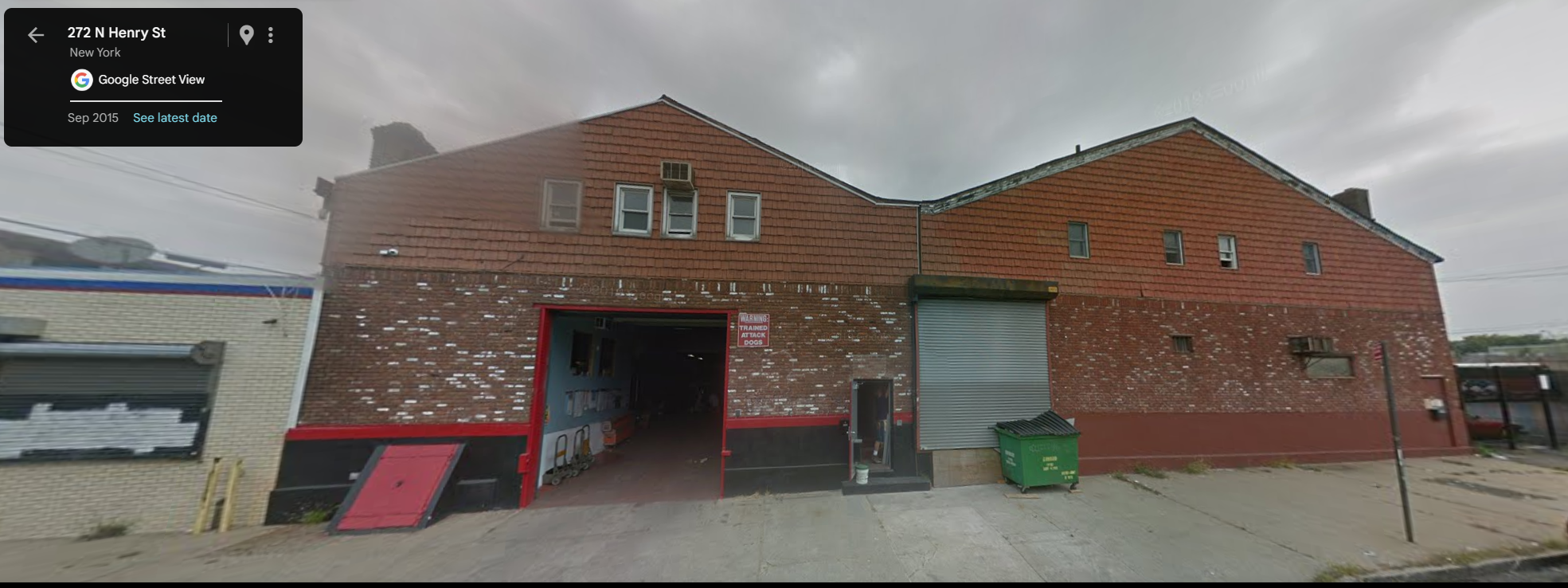
By 1901it was claimed that Hay-Budden was the largest manufacturer of anvils in the world. Hay-Budden had produced some 60,000+ anvils ranging in size from 10 to 800lbs and employed ~300 men making 125 tons of anvils every month. These anvils were produced for a domestic and international market with anvils being shipped to Australia, Asia, Africa, South America, China, India, and Europe.

254-278 North Henry Street – 1912
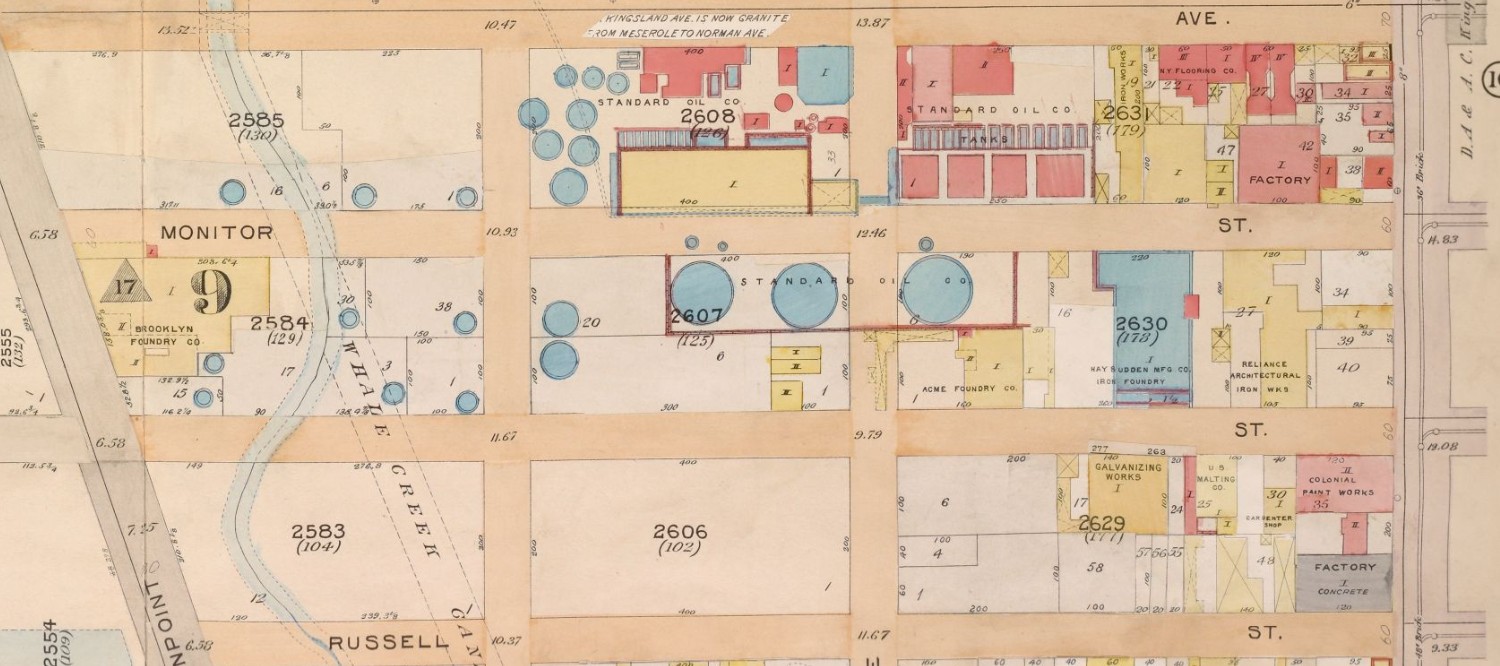
Brooklyn, Vol. 3, Double Page Plate No. 15;
Timeline:
-
- 1886 – Reference to Hay Budden making anvils from a 1914 article.
- 1887 Aug 23rd – Ellen M. Hay buys property on Frost Street. This land was likely purchased in Ellen (Hellen’s) name to provide legal protection under the Married Women’s Property Acts of 148 and 1860 to shield the property from any lawsuits related to the fledgling Hay-Budden business.
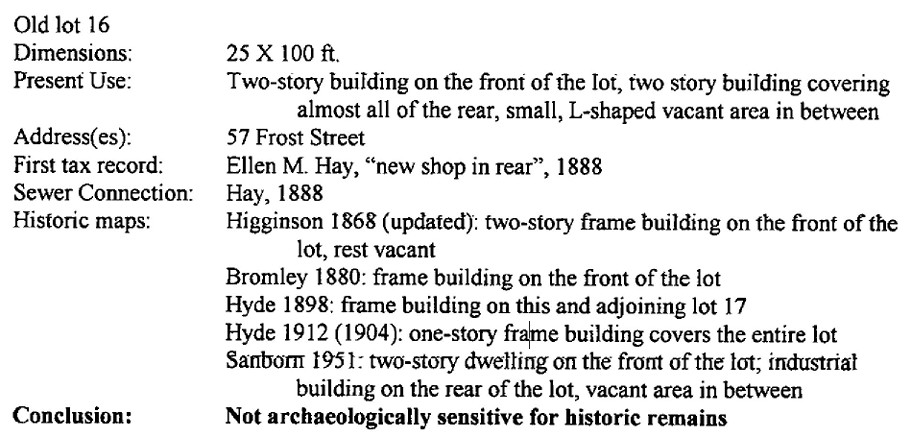
- 1888 – Lot History
- 1890 – October 1st – McKinley Tarrif bill passes
- 1890 – James Hay & Frederick Budden have a small blacksmithing shop on Frost Street (near American Wrought Anvil Co.)
- 1891 – Ellen Hay buys the 3rd lot on Frost street.
- 1893 October 4th – Hay- Budden Manufacturing Co. is established with $20,000 in financing. The National Corporation Reporter
-
- Walter F. Ring joins and the three men start “The Hay-Budden Manufacturing Company and move their location to North Henry Street.
-
- 1893 October 5th – James Hay, Frank Budden and Walter F. Ring of Brooklyn incorporate Hay-Budden Manufacturing Company. – The Evening World
- 1893 – Incorporation mentioning 200 shares of $100 each Brooklyn Eagle
- 1893 October 12th – The Iron Age –
- 1893 – October 14th The Metal Worker
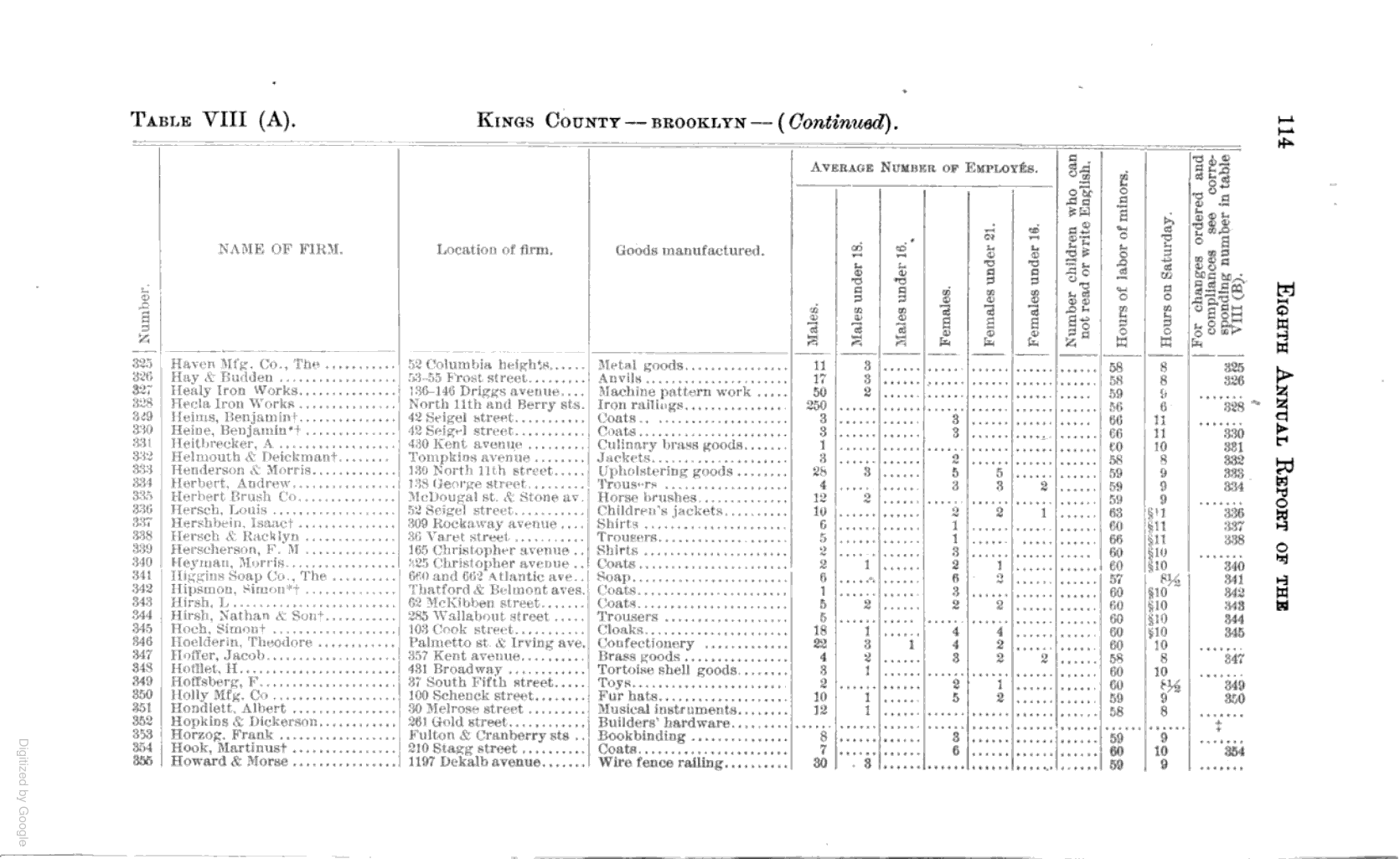
- January 31st 1894 – Inspectors Report
- Address: 53-55 Frost Street
- Goods Manufactured: Anvils
- Average Number of Employees
- Males: 17; Under 18: 3; Under 16: 0
- Females: 0, Under 21: 0, Under 16: 0
- 1894 July 18th – Now with 4 directors up from 3 – Brooklyn Eagle
- 1894 June 13th Stockholders Meeting – The Brooklyn Daily Times
- 1894 – July 3rd – The Brooklyn Daily Times
- 1894 – 2 new buildings built by Hay Budden – Brooklyn Eagle
- 1894 – Fifty-Thrid Congress, Second Session Vol. XXVI
- 1894 – September 30th – Record of Hay-Budden Incorporation Tax for $25
- 1895 October 10th – The Iron Age pg751
- October 2nd – Anvil Prices
- October 10th
- October 2nd – Anvil Prices
- 1896 March – The Blacksmith and Wheelwright
- 1896 – Hay-Budden, Wrought –
- Current Hardware Prices – May 6th
- Current Hardware Prices – May 6th
- 1897 January 31st – Hay-Budden argues for higher tariff rates on anvils. – Brooklyn Eagle
- 1897 – Lain & Healy’s Brooklyn Directory for the year ending May 1, 1897
- Hay James president, 278 N. Henry, h 184 Frost
- McMillian James blacksmith h r 184 Frost
- 1897 – Lain & Healy’s Brooklyn Directory for the year ending May 1, 1897
- Budden Fredrick C. blacksmith, 254 N Henry, h 37 Skillman av
- Ring Walter F. anvilmft. 254 N Henry, h Jamaica L. I.
- Budden Fredrick C. blacksmith, 254 N Henry, h 37 Skillman av
- 1897 – June – The Hub Vol XXXIX No 3.
- 1898 January 1st – Hay Budden applies for space at the Omaha World Faire. They plan on exhibiting an anvil weighing a ton and another the size of a thimble. – Omaha World-Herald
- 1899 – Anvils shipped to China – Brooklyn Eagle
- 1899 – Hay-Budden shut down due to coal shortages – The Brooklyn Citizen
- 1899 August 6th – The Making of Anvils – Brooklyn Eagle
- 1899 October 11th – Mini Anvils – The Pittsburgh Press
- 1899 – Lain & Healy’s Brooklyn Directory for the year ending May 1, 1899
- Hay James anvils, 254 N Henry, h 184 Frost
- Hay & Budden Mfr. Co. anvilmfrs. 254 N Henry

- Ring Walter F. sec. 254 N Henry, h Jamica L. I.
- 1900 Brooklyn Eagle report on fire.
- The Sun report
- Brooklyn Eagle – New Building April 30th
- 1900 March 3rd 7pm, Saturday – A fire destroys the Hay-Budden Anvil Factory at 254-278 North Henry Street Brooklyn with $150,000 dollars in damage.
- Court RecordRapid Safety Fire Extinguisher Company vs. Hay Budden Manufacturing Company for 10 fire extinguishers destroyed in the fire ($150 value). Eventual finding was for the Plantiff for $170.17 total.
- Employees paid at 4pm, everything shut down by 4:30 pm.
- Watchman onsite to protect against fire.
- Frederick C. Budden of No. 37 Skillman Ave, Brooklyn
- Walter F. Ring of Lefferts Ave, Richmond Hill, Queens
- 1900 – June 27th – Ellen M. Hay loan against Frost Street property.
- 1901 – The Horseshoers’ Magazine article on the history and recovery of Hay-Budden after the fire in 1900.
- Largest manufacturer of anvils in the world.
- Makers of the first solid wrought anvils with steel face in one piece made in the US.
- 1899 – fifty 300lb anvils shipped to Chinese Eastern railroad at Vladivostok.
- Shipments to Australia, Asia, Africa, South America, China, India, and Europe.
- Founded 11 years ago (1890)
- The business was initially a blacksmith shop where James Hay & Frederick C. Budden worked along with a few helpers worked on Frost Street (the same street as American Wrought Anvil Co.).
- In 1893 they decided to manufacture anvils.
- Walter F. Ring joined and the business was incorporated as “The Hay-Budden Manufacturing Company”
- Company moved to the location on North Henry Street
- 300 men employed with $150,000 annual wages.
- 125 tons of completed anvils per month
- 1901 – Hay Budden anvil as part of default sale – Courier Democrat
- 1901 May 1st – Nov 2nd – Hay Budden has a site, R-23, at the Pan American world fair in Buffalo NY.
- 1901 – The American Blacksmith: Vol 1
- 60,000 in use.
- 1902 – Frederick C. Budden’s son runs away to visit a friend. Link
- Mr. Budden lives in a handsomely appointed Queen Anne cottage on a fashionable street in Richmond Hill.
- 1902 – James Hay – gets a new home.
- Home is on the corner of Orchard (86th ave) and Welling (now 110st) streets in Richmond Hill.
- Nickname “Jim” Hay.
- Member and office holder in both Kilwinning Lodge of Masons and Clan Macdonal.
- 1903 – Upington’s General Directory of Brooklyn, New York City, for the year 1903
- Hay-Budden Mfg. Co. anvils, 254 N. Henry

- 1904 – Upington’s General Directory of Brooklyn, New York City, for the year 1904
- Hay-Budden Mfg Co anvils 254 N Henry
- 1906 – Upington’s General Directory for the Borough of Brooklyn, City of New York, for the year 1906
- Hay-Budden Mfg Co anvils 254 N Henry
- 1906 Dec 8th – James Hay Silver Wedding anniversary
- 1907 – Upington’s General Directory of the Borough of Brooklyn, City of New York, for the year 1907
- Hay-Budden Mfg Co anvils 254 N Henry
- 1907 Feb 2nd – Accident with James Hay and Fredrick Budden
- 1908 – Upington’s General Directory of the Borough of Brooklyn, City of New York, for the year 1908
- Hay-Budden Mfg Co anvils 254 N Henry
- 1908 – Patent 922,475 – Manufacture of Anvils filed Oct 12, 1908 Serial No 457,222
- 1910 – New York City (including all boroughs) Telephone Directory
- Hay-Budden MfgCo,Anvils.254NHenry . 247 Greenpnt
- 1911 September 10th – James M. Hay death. – Brooklyn born Son of James Hay.
- 1912 January 22nd – New building built for Hay Budden.
- 1912 June 6th – Alienation Suit Ends Friendship (James Hay)
- 1914 – New York City (including all boroughs) Telephone Directory
- Hay-Budden Mfg Co,Anvils.254NHenry.Greenpnt 247
- 1914 – October – The American Blacksmith – Article referencing Hay-Budden and their history.
- Reference of Hay Budden starting to make anvils in 1886.
- 1914 – Hay Budden Lists and Patterns pamphlet
- 1917 – New York City (including all boroughs) Telephone Directory
- Hay-Budden MfgCo.Anvils 254NHenry Greenpnt 247
- 1917 May 2nd – Budden Children withdraw contest of father’s will.
- Address: Brandon (86th street?) & Napier Ave. (97 St.) Richmond Hill (actually Woodhaven?)
- https://www.stevemorse.org/census/changes/QueensChanges2_81to120.htm
- James P. Judge is vice president & a director.
- Address: Brandon (86th street?) & Napier Ave. (97 St.) Richmond Hill (actually Woodhaven?)
- 1918 May – Railway and Locomotive Engineering New Design of Shop Face Grinder
- 1920 – New York City (including all boroughs) Telephone Directory
- Hay-Budden MfgCo,Anvils,254NHenry Greenpnt 247
- 1925 – Hay Budden Bankrupt



Known Employees
- 1890 – James Hay – President
- 1890 – Fredrick C. Budden – Junior Partner
- 1893 – Walter F. Ring – Treasurer
- 1893-1899 – Thomas William – Suspected but not confirmed.
- 1900 – John Johnson – Employed as a watchman. On duty during the 1900 fire.
- 1906 – John Neal – Knocked down by a furnace door and sustained scalp wounds.
- 1907 – James McClellan – Employed on the first floor. Iron fell from the second floor onto him.
- 1907 – John F. Walsh – Employee who died from unspecified causes.
- 1908 – John Auger – Hand amputated after steam hammer accident.
- 1917 – James P. Judge – Vice President and Director in Hay-Budden
Identification
Identification Text
Hay-Budden Serial Numbers
From Anvils in America
| Date +/- 2 years | Serial Number | Notes | Date +/- 2 years | Serial Number | Notes |
|---|---|---|---|---|---|
| 1892 | 1-3,000 | 1909 | 160,001-170,000 | ||
| 1893 | 3,001-9,000 | 1910 |
170,001-180,000 |
||
| 1894 | 9001-16,000 | 1911 | 180,001-190,000 | ||
| 1895 | 16,001-23,000 | 1912 | 190,001-200,000 | ||
| 1896 | 23,001-30,000 | 1913 | 200,001-210,000 | ||
| 1897 | 30,001-37,000 | 1914 | 210,001-220,000 | ||
| 1898 | 37,001-42,000 | 1915 | 220,001-230,000 | ||
| 1899 | 42,001-50,000 | 1916 | 230,001-243,000 | ||
| 1900 | 50,001-60,000 | 1917 | 243,001-250,000 | ||
| 1901 | 60,001-75,000 | Ad states over 60,000 in use. | 1918 | A1-A12,000 | |
| 1902 | 75,001-82,000 | 1919 | A12,001-A20,000 | ||
| 1903 | 82,001-89,000 | 1920 | A20,001-A30,000 | ||
| 1904 | 89,001-96,000 | 1921 | A30,001-A40,000 | ||
| 1905 | 96,001-109,000 | 1922 | A40,001-A50,000 | ||
| 1906 | 109,001-125,000 | 1923 | A50,001-A54,000 | ||
| 1907 | 125,001-150,000 | 1924 | A54,001-A56,000 | ||
| 1908 | 150,001-160,000 | 1925 | A56,001-A57,000 | ||